
The core issues to be settled -- access to Hormuz, Israel's aggression in Lebanon, the question of Iran's nuclear programme, sanctions relief and compensation -- are thorny enough to require weeks of patient negotiation. The most likely outcome of the opening sessions is that both sides take the measure of each other, establish what is and is not negotiable, and return home without having broken anything. That would count as progress.

Egypt, Pakistan, Saudi Arabia and Turkey met in Islamabad in what analysts say is the formal opening of a new diplomatic formation that could reshape the post-war regional order. Their immediate goal is a ceasefire; their larger ambition is to ensure that neither Iran nor Israel emerges from this war in a dominant position. Pakistan's foreign minister then flew directly to Beijing and mooted a Chinese role as guarantor of any eventual agreement. Prem Panicker continues his must read daily blog on the Gulf War.

'Was the five-day pause ever meant to hold, or was it simply another instrument of signaling, of positioning, of buying time in a war where even the pauses are tactical?' asks Prem Panicker in his must read daily blog on the Gulf War.

The question is no longer whether the war will expand. It has. The next few days will tell us whether the war stabilises around Hormuz or whether the Strait itself becomes the trigger for a far larger rupture. What to watch for over the next 48 hours is simple: Any move by the US toward direct naval control of the Strait; any credible Iranian attempt to disrupt or mine shipping lanes and, critically, whether energy infrastructure in the Gulf continues to be targeted.If those lines are crossed in tandem, the war will no longer be containable within the region.
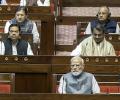
Parliamentary Affairs Minister Kiren Rijiju stated the government is open to discussing electoral reforms in the Rajya Sabha, urging the Opposition not to impose a timeline. Opposition parties staged a walkout after demanding an immediate discussion on the Special Intensive Revision of electoral rolls.
Indian refiners are likely to import 2-2.2 million barrels per day of Russian crude oil in June - the highest in the last two years and more than the total volumes bought from Iraq, Saudi Arabia, the UAE and Kuwait, preliminary data by global trade analytics firm Kpler showed.

The Bharatiya Janata Party is hopeful that the issue will come handy to its efforts to gain political traction in Dravidian state as it gears up for the Lok Sabha polls.
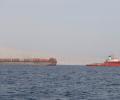
US strikes on Iran's three main nuclear facilities have once again raised concerns that Tehran might shut down the Strait of Hormuz - one of the world's most critical chokepoints, through which a fifth of global oil and gas supply flows.

The suspense over whether Rahul Gandhi and Priyanka Gandhi Vadra will contest the polls from Amethi and Raebareli respectively continued.

Campaigning ended on Wednesday evening for 102 Lok Sabha seats across 21 states and Union territories which will go to polls in the first phase on April 19 with top leaders of the Bharatiya Janata Party-led National Democratic Alliance and the opposition Indian National Developmental Inclusive Alliance (INDIA) making a last-gasp effort to woo voters.

Voting was underway on Friday in 102 Lok Sabha seats spread across 21 states and Union territories in the first of the seven phases of the world's largest electoral exercise, with Prime Minister Narendra Modi urging voters to exercise their franchise in record numbers.
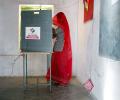
The IMD has warned of heatwave to severe heatwave conditions in parts of West Bengal, Odisha, Bihar, Jharkhand, Andhra Pradesh, Telangana, Karnataka and Uttar Pradesh during the next five days.
MLAs of smaller parties like the Bachhu Kadu-led Prahar and Independent legislators also attended the meeting, Prabhu added.

Congress general secretary (communications) Jairam Ramesh said they will pose three questions a day to Prime Minister Narendra Modi over the issue.

His name was cleared by a three-member selection panel headed by Prime Minister Narendra Modi and comprising Chief Justice of India Jagdish Singh Khehar and Congress leader in Lok Sabha Mallikarjun Kharge as members.

From the 'group of 23' leaders, who had written letter to Gandhi seeking Congress' overhaul, Azad and Sharma continue to be regular members of the CWC,
